

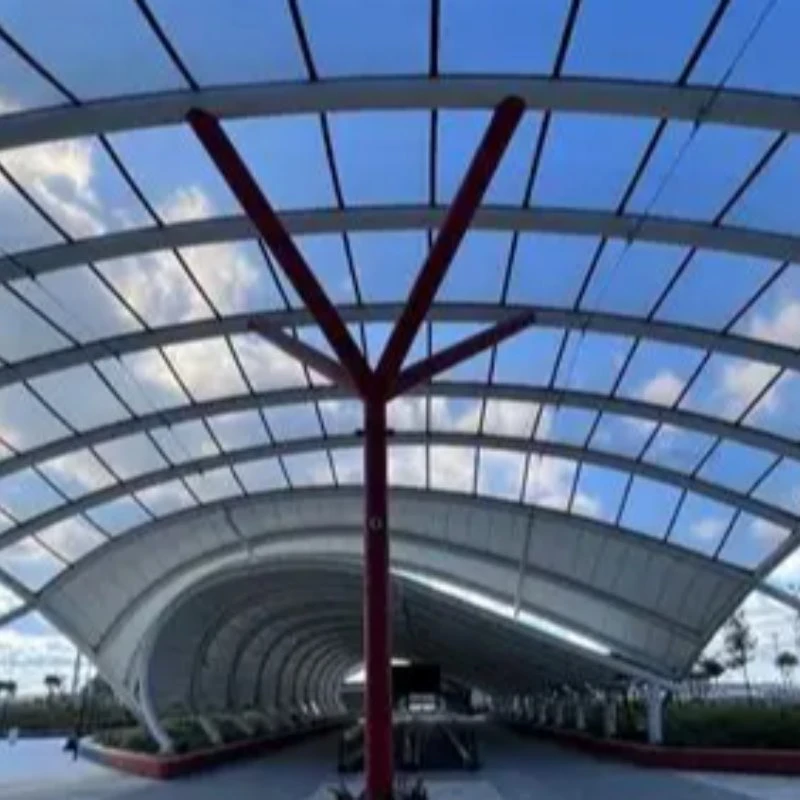

High-transparency Membrane are architectural fabrics specifically engineered to achieve light transmission rates of 70% or higher. These materials excel in providing exceptional daylighting properties while offering significant energy savings, lightweight construction, and flexible design possibilities. They are particularly suitable for structures where maximizing natural illumination is a primary design objective.


Primary Material Types and Characteristics
ETFE Membrane
Light Transmission: Outstanding 85%-95% transparency, comparable to glass with soft, glare-free light diffusion
Durability: Exceptional weather resistance across extreme temperatures (-200°C to 150°C)
Service Life: 15-25 years with self-cleaning capabilities
Applications: Typically used in pneumatic cushions (single, double, or triple-layer) or single-layer tension systems for large-span, high-transparency requirements
PTFE Membrane
Light Transmission: 70%-85% with distinctive light-diffusing qualities that create evenly distributed natural illumination
Performance: Excellent weather resistance, corrosion protection, and aging resistance
Longevity: 15-30 year design life for permanent structures
Structural Adaptation: Glass fiber base provides high strength suitable for large-span tension or frame-supported applications
High-Transmission PVC Membrane
Light Transmission: 70%-80% with cost-effective pricing and easy installation
Flexibility: Superior adaptability for complex shapes, though with moderate weather resistance
Service Life: 8-12 years for short to medium-term applications
Design Considerations and Technical Requirements
Light Transmission Management
Select appropriate transmission levels based on application (≥85% for greenhouses, 70%-80% for commercial buildings)
Incorporate shading coatings where light modulation is required
Consider seasonal light angle variations in system design
Thermal and UV Protection
Multi-layer ETFE cushions utilize air gaps for enhanced insulation
Low-E coatings can be applied to reduce infrared transmission
UV stabilizers in PTFE and PVC materials block over 90% of harmful ultraviolet radiation
Structural Integration
Most high-transmission membranes require pre-tensioning or supporting frameworks (steel structures, cables) for shape stability
ETFE cushions and PTFE membranes are preferred for large-span applications due to their strength and dimensional stability
Coordinate with structural engineers to ensure proper load distribution and wind resistance
These advanced membrane materials enable architects to create luminous, energy-efficient spaces that harness natural light while maintaining structural integrity and long-term performance.
Hot Tags: high-transparency membrane, China high-transparency membrane manufacturers, factory, cell surface membrane structure, High transparency Membrane, Fire resistant Membrane, carbon nanotube membrane, UV resistant Membrane, dialysis tubing


