

Deep Digitalization and Collaboration in Design Methods

From BIM to Digital Twin
Design has fully entered the BIM (Building Information Modeling) era, enabling 3D visualization design, clash detection, and automatic quantity takeoff. The future is moving towards "digital twins," creating a virtual model that is fully synchronized with the physical structure, used for simulation, optimization, and management throughout the entire lifecycle (design, construction, and operation).
Parametric and Algorithmic Design
With tools like Grasshopper and Dynamo, designers can quickly generate and optimize complex structural forms and mesh divisions by adjusting parameters, achieving a balance between architectural creativity, structural efficiency, and component standardization.
Integrated Collaborative Design
Structural, architectural, mechanical, electrical, and curtain wall disciplines collaborate on a unified digital platform, reducing errors and omissions from the source, which is especially crucial for complex 3D models with intricate nodes.
Refinement, Diversification, and High Performance of Nodes and Structures
Refined Analysis of Intersecting Nodes
With increased computing power, the stress analysis of complex intersecting nodes has evolved from elastic to elastoplastic, with in-depth research on node failure mechanisms and ultimate bearing capacity, guiding safer and more economical designs.
Application of Hybrid Nodes
In addition to fully welded intersecting nodes, cast steel nodes (for extremely complex intersections), steel pipe-pin nodes (for easy installation and disassembly), and steel pipe-bolt ball composite nodes have been developed to meet different needs.
Application of New Materials
High-strength steel, stainless steel, aluminum-magnesium alloys, and even fiber-reinforced polymer (FRP) pipes are being used to pursue lighter, stronger, more corrosion-resistant, or unique architectural effects.
High Automation and Intelligence in Fabrication and Construction
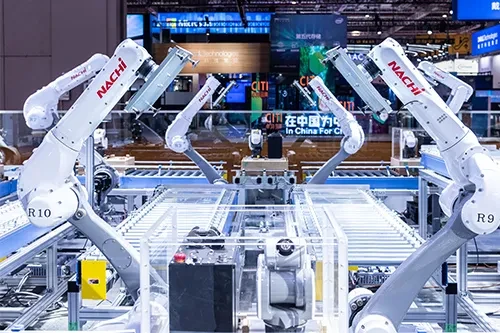
Improve efficiencyIntelligent Construction and Robotics Technology
CNC Cutting and Welding Robots: The automation and robotization of intersecting line cutting and welding are increasing, ensuring quality, improving efficiency, and reducing reliance on highly skilled technicians.
3D Printing (Additive Manufacturing)
For special nodes or small batches of complex components, metal 3D printing technology provides new solutions, enabling topologically optimized forms that cannot be manufactured by traditional processes.
Modular and Integrated Lifting Technology
Trusses are assembled into large integrated units on the ground, and then installed in place as a whole using hydraulic synchronous lifting technology, significantly reducing high-altitude work, improving accuracy and safety


